
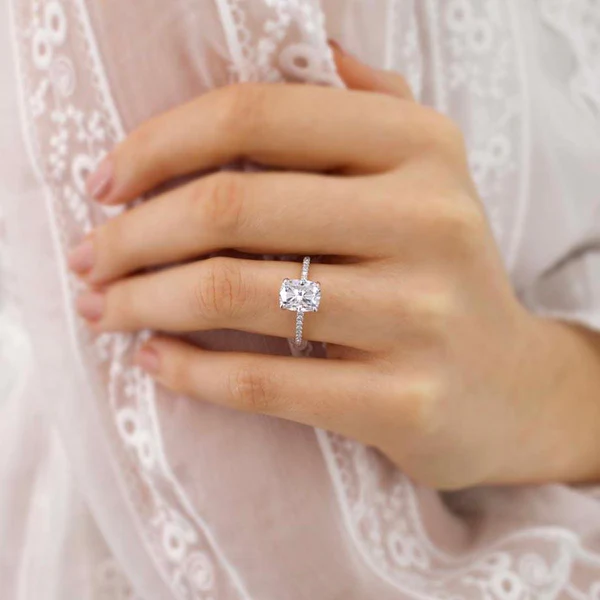


The allure of a brilliant centre stone is timeless. Whether chosen for an engagement, anniversary, or personal milestone, a ring is often expected to capture light and attention from every angle. Today’s couples are increasingly exploring the differences between moissanite & diamond rings, weighing not only sparkle but also practicality, ethics, and long-term value. Understanding how these two gemstones perform in everyday wear can make all the difference in choosing a ring that truly reflects your priorities.
Brilliance and Fire: Understanding the Sparkle
At first glance, both moissanite and diamond appear strikingly similar. However, their sparkle behaves differently under light. Diamonds are celebrated for their balance of brilliance (white light reflection) and fire (rainbow flashes). This creates a crisp, refined scintillation that many consider the benchmark of classic elegance.
Moissanite, on the other hand, has a higher refractive index than diamond. The result is a more intense display of colourful flashes. In natural daylight, this can appear vibrant and lively; under evening lighting, it often feels dramatic and eye-catching. For someone who loves noticeable sparkle especially in larger stone sizes such as 2 carats moissanite offers exceptional visual impact without overwhelming the design. A larger stone doesn’t just increase size; it amplifies the play of light across every facet.
Durability for Everyday Wear
An engagement ring is worn daily, so durability matters. Diamonds rank 10 on the Mohs scale of hardness, making them the hardest known natural gemstone. They are highly resistant to scratching and ideal for lifelong wear.
Moissanite ranks just below at 9.25, which is still exceptionally durable. In practical terms, this means it stands up remarkably well to everyday activities. For most wearers, the difference in hardness is negligible. Both stones are suitable for long-term use, particularly when set in protective settings such as halos or bezel designs.
The choice often comes down to lifestyle. Someone with a very hands-on profession might appreciate diamond’s marginal edge in hardness. Yet for the vast majority of modern brides and jewellery enthusiasts, moissanite provides more than sufficient resilience without compromising beauty.
Value and Ethical Considerations
Budget inevitably plays a role in selecting a centre stone. Diamonds, particularly larger or higher-clarity stones, command premium prices. For some, this reflects tradition and rarity; for others, it may limit design flexibility.
Moissanite offers a compelling alternative. Its price point allows buyers to opt for a larger centre stone, intricate settings, or complementary wedding bands without exceeding budget. Choosing a 2-carat equivalent, for instance, becomes far more attainable not merely for visual presence but for proportion. A larger stone can better balance wider bands or elaborate vintage-inspired settings.
Ethically, moissanite is lab-created, ensuring a transparent and environmentally mindful production process. While many diamonds today are responsibly sourced or lab-grown, moissanite provides inherent peace of mind for those prioritising sustainability from the outset.
Style Versatility and Design Potential
The setting plays a crucial role in how either gemstone is perceived. Moissanite works beautifully in both minimalist solitaires and intricate halo designs. Its heightened fire pairs especially well with contemporary cuts such as oval, cushion, or radiant shapes, where additional facets enhance sparkle.
Diamonds, conversely, lend themselves effortlessly to traditional round brilliant solitaires, a timeless aesthetic many couples still gravitate towards.
For those who prefer understated elegance, a smaller moissanite in a refined platinum or white gold setting can emulate classic diamond styling while maintaining a distinct character. Alternatively, those who favour bold glamour may find that moissanite’s lively flashes complement statement designs particularly well.
Ultimately, the decision is less about which stone is “better” and more about which aligns with your personal expression. Some seek heritage and convention; others prioritise innovation and brilliance.
Final Thought
Choosing between moissanite and diamond is a deeply personal decision. Both offer durability, beauty, and lasting symbolism. The difference lies in the quality of sparkle you’re drawn to, how you prioritise budget and ethics, and how you envision your ring reflecting your individuality. By understanding how each stone performs in real life not just under showroom lighting you can select a piece that feels authentic, enduring, and brilliantly yours.